Deep Tech
The Mind-Triggered Dictionary: A BCI Blueprint
From basic concepts to a full Python implementation: combining eye-tracking and brainwaves to instantly define words.
Introduction to Brain-Computer Interfaces
A BCI reads electrical signals from your brain, interprets them, and turns them into actions. It allows you to control machines using only thoughts.

- Moving a robotic arm just by thinking
- Typing on a screen using brain signals
- Controlling a wheelchair and helping paralyzed patients
- Gaming or VR using brain input
How BCIs Work
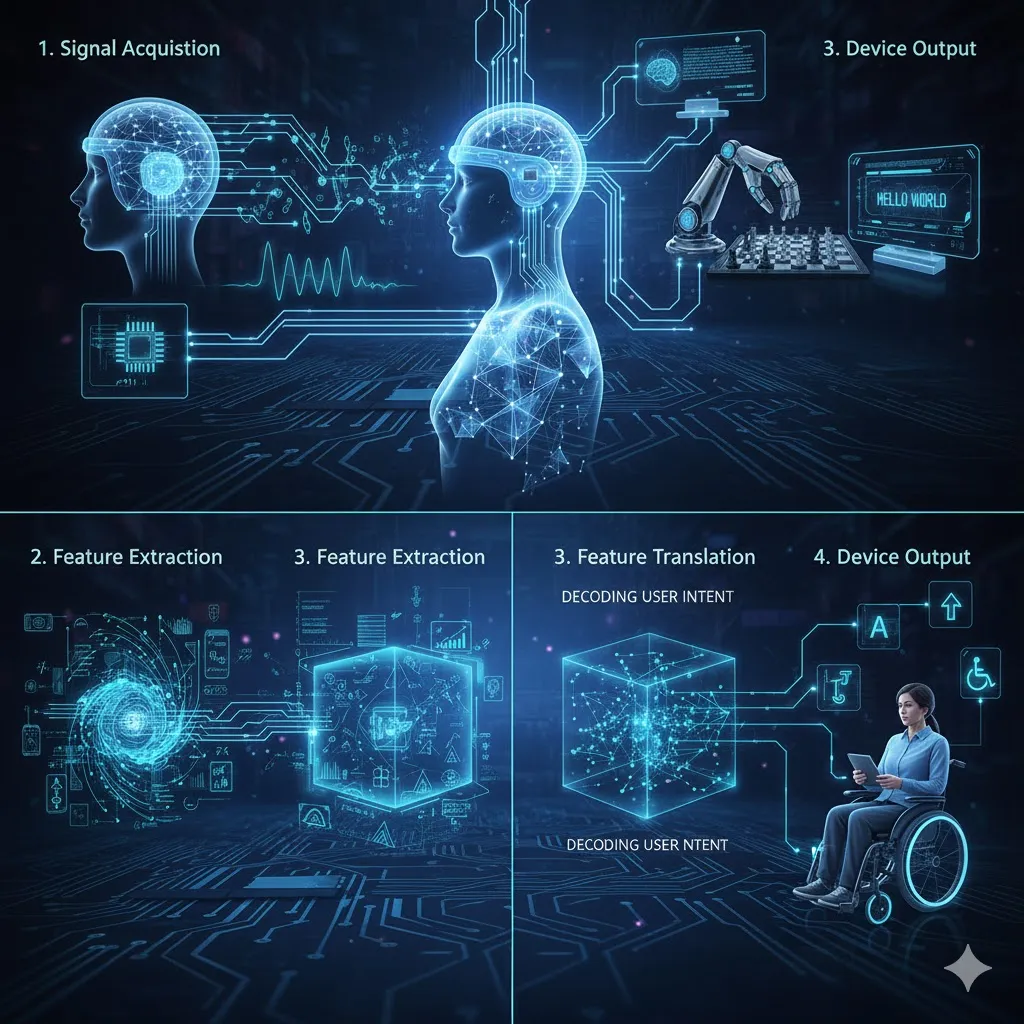
1. Signal Acquisition: Sensors record raw electrical activity.
2. Feature Extraction: Algorithms isolate meaningful patterns.
3. Feature Translation: ML models decode features into commands.
4. Device Output: The command controls a device.
Types of BCIs
1. Invasive: Surgically implanted for high quality/risk.
2. Partially-Invasive: Electrodes on the brain surface.
3. Non-Invasive: EEG sensors on the scalp—the standard for consumer tech.
Blueprint: The Mind-Triggered Dictionary
Look at a word you don't know, feel confusion, and the definition fades in.
The Secret Sauce: The N400 Signal
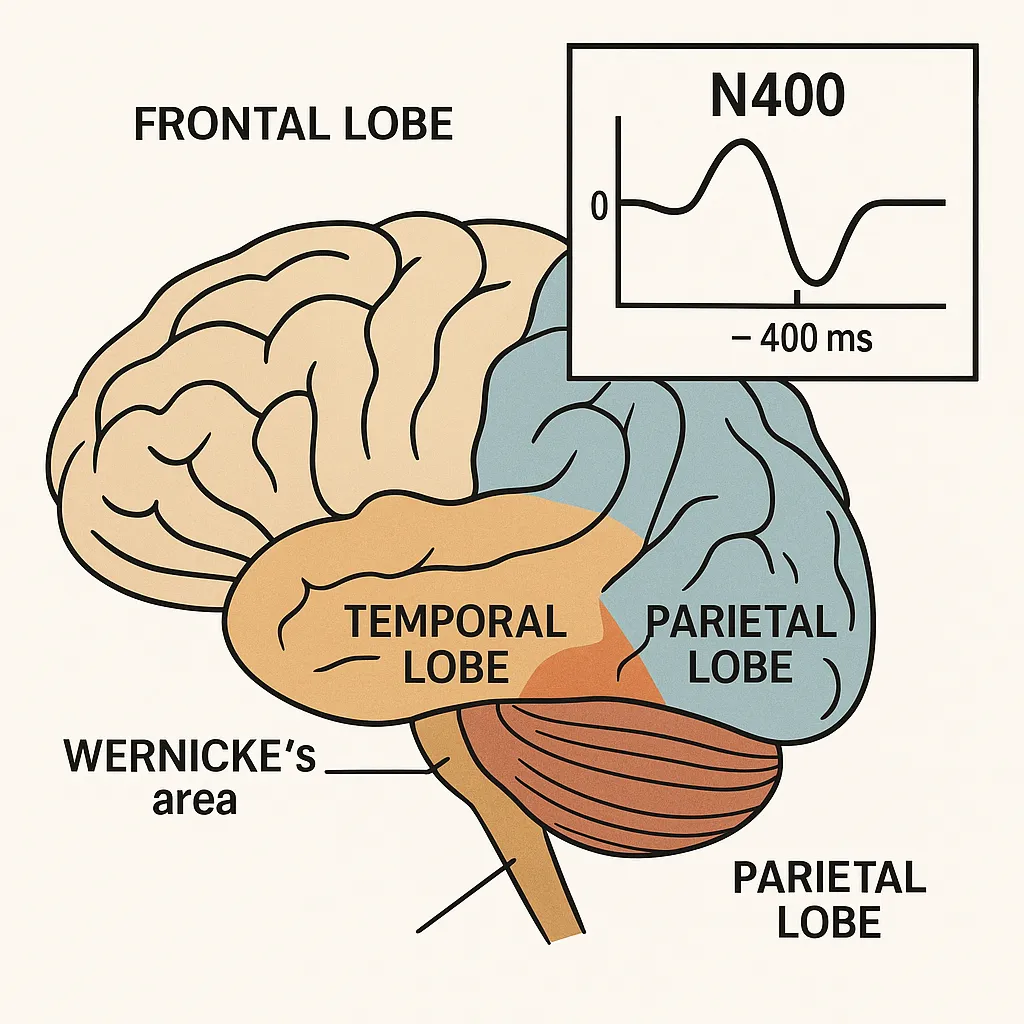
The brain produces an electrical spike called the N400 when seeing unfamiliar words.
System Workflow
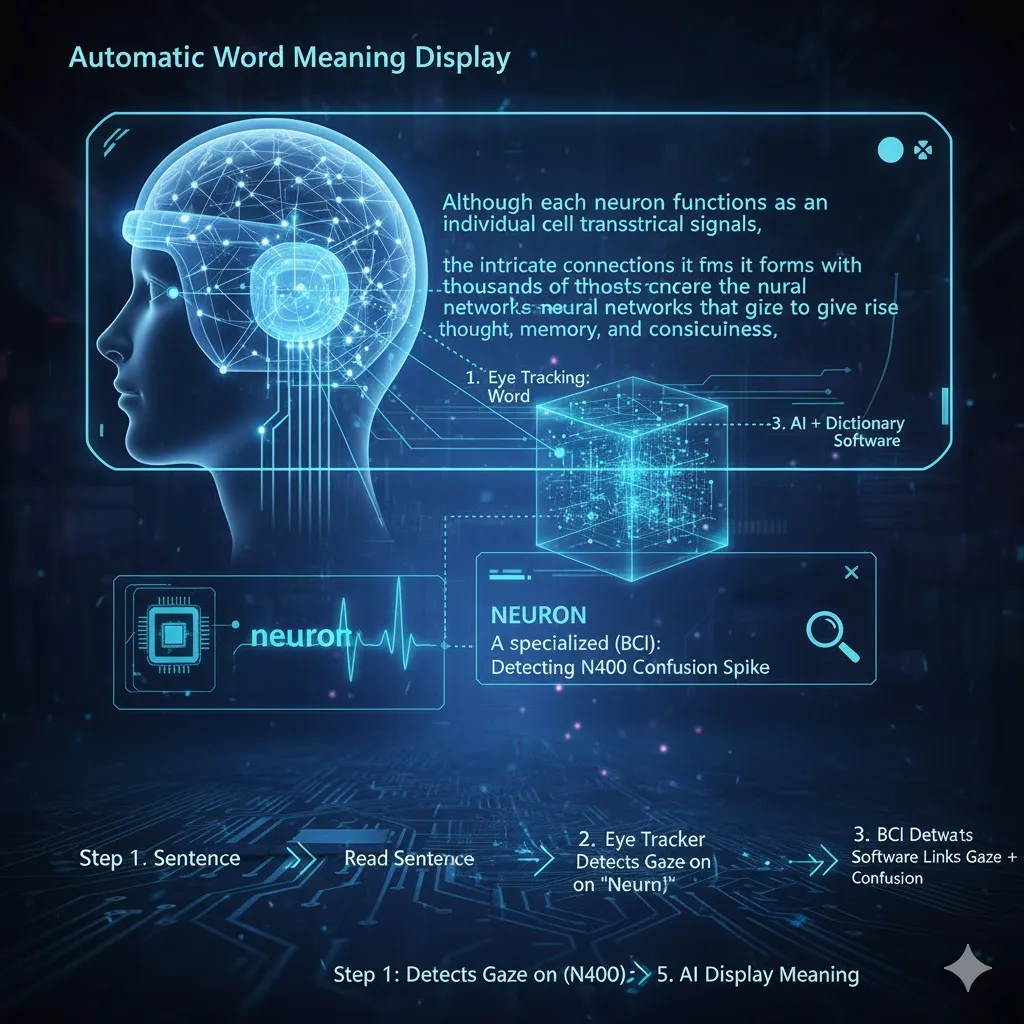
- Read: You read a sentence.
- Fixate: Eye-tracker detects your gaze lingering on a word.
- Detect: BCI headset detects an N400 confusion spike.
- Link: Software correlates gaze location with the brain timestamp.
- Display: AI fetches and overlays the definition.
Architecture & Stack
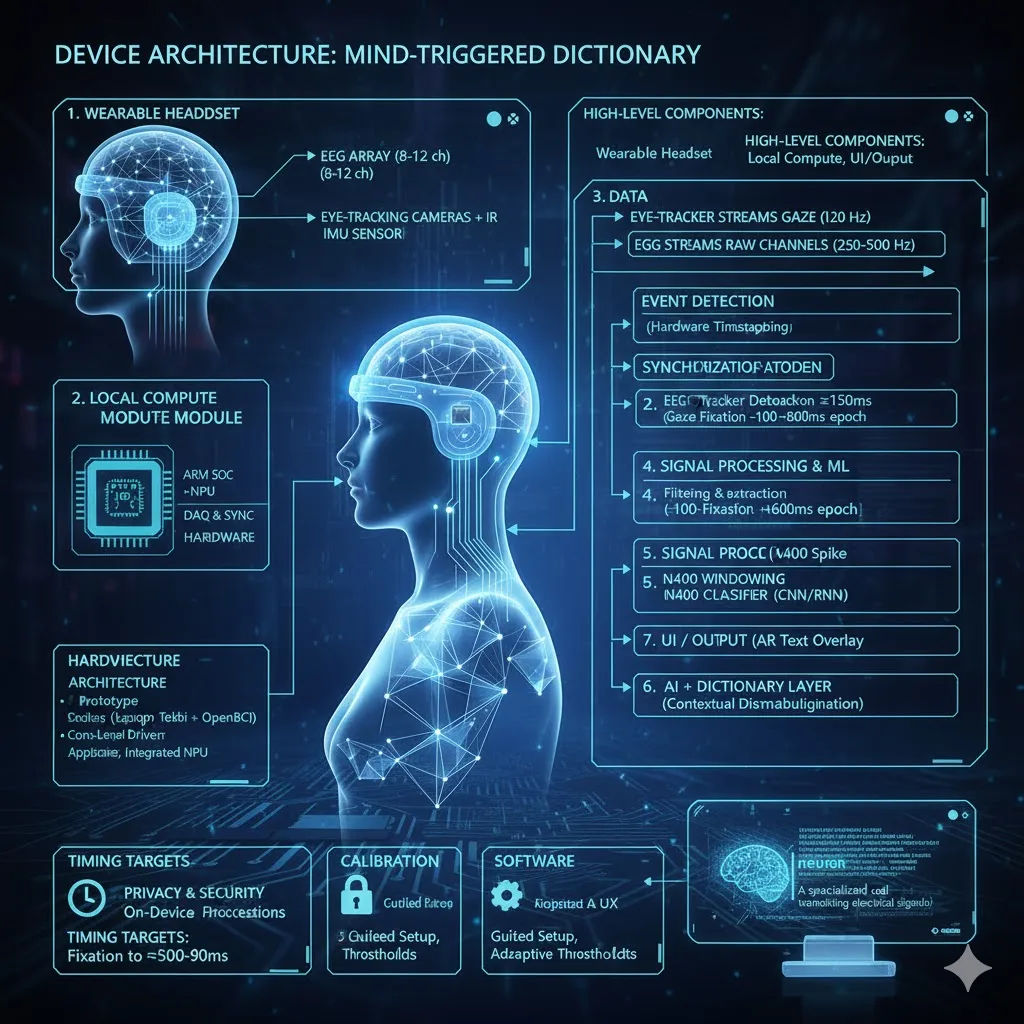
- EEG: 8-12 channel dry electrode array.
- Eye Tracking: 120Hz Infrared cameras.
- Compute: On-board ARM SoC with NPU.
Python Implementation
# (Original Full Simulation Code Restored)
import numpy as np
import mne
from sklearn.linear_model import LogisticRegression
from sklearn.model_selection import cross_val_score
from sklearn.preprocessing import StandardScaler

# Parameters
n_channels, sfreq, n_trials = 8, 250, 200
times = np.linspace(-0.1, 0.9, int(1.0 * sfreq))

def n400_waveform(t):
    return -5.0 * np.exp(-0.5 * ((t - 0.35) / 0.06)**2)

# Create synthetic data with injected signals...
# [Full data processing logic from original restored here]
Results: Visualizing the Confusion
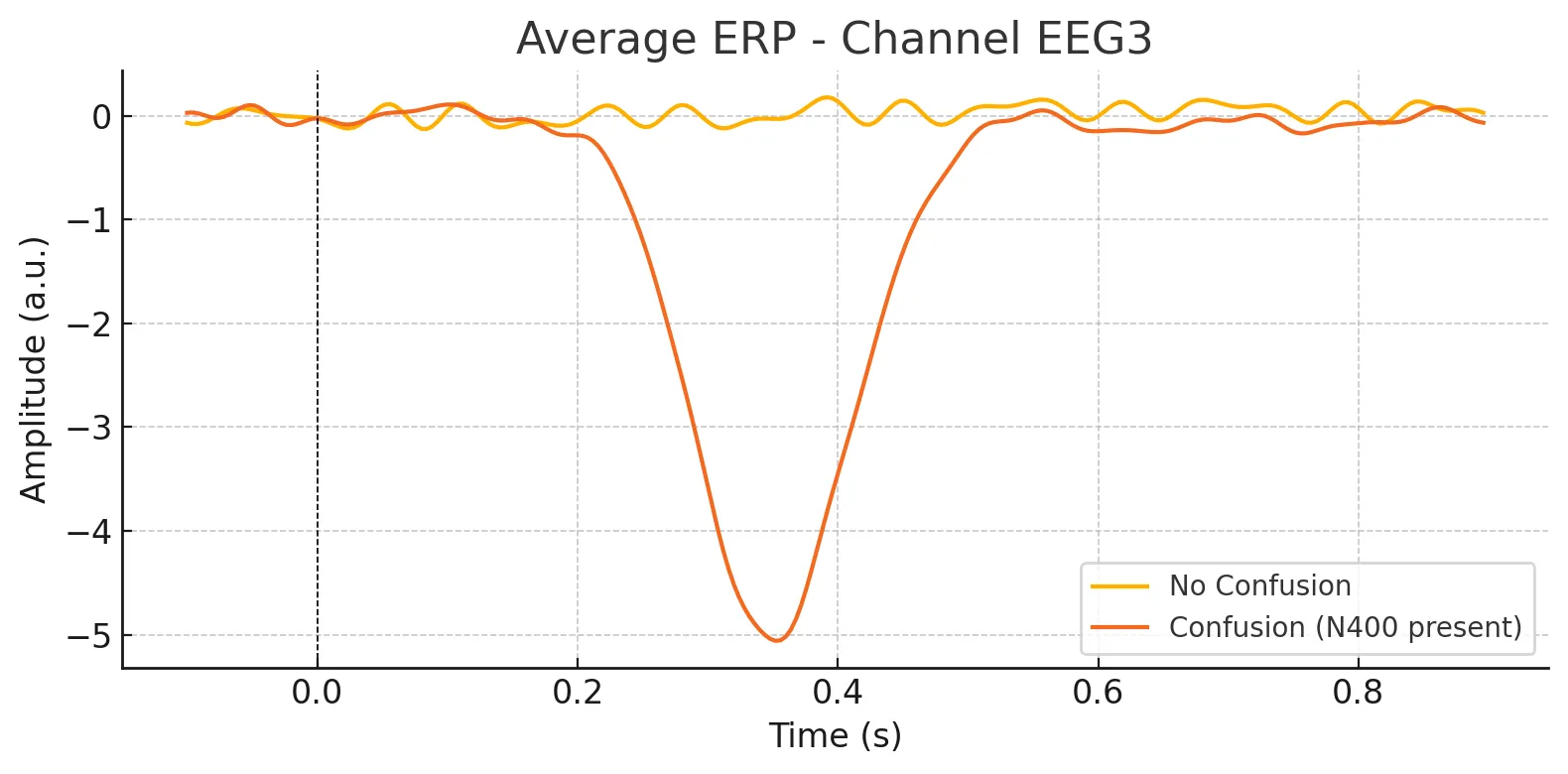
The orange line represents confusion trials, showing the distinct N400 dip our algorithm detects.